
Equal-area maps that show the world as it actually is.
The Authagraph projection preserves area and shape in ways the Mercator cannot. Primary ($55), Elementary ($65), or the complete collection ($99).
Three ways to get the complete map set.
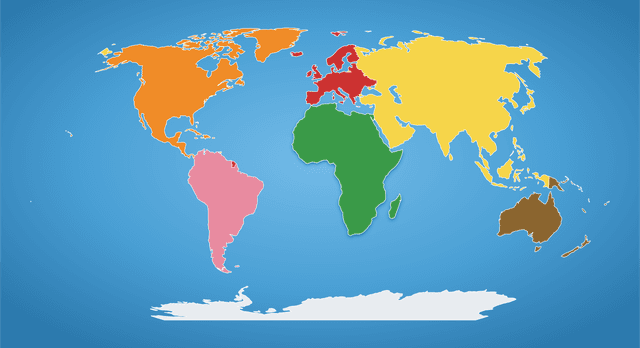
Primary Map Collection
Six equal-area projection maps for primary classrooms (ages 3-6). Color-coded by continent, sized for small hands and large floor work. Includes political, blank, and outline versions.
$55
Buy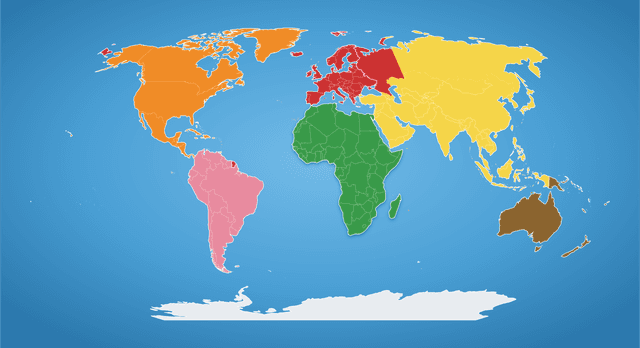
Elementary Map Collection
Six equal-area maps for elementary classrooms. Political, blank, and outline versions scaled for research, annotation, and independent work in the second plane.
$65
BuyBest value
Complete Map Collection
Both sets together. Primary and Elementary, all versions. One purchase covers the full school from primary through upper elementary.
$99
BuyThe Mercator projection has a problem.
Every flat map distorts the sphere. Mercator preserves shape but catastrophically distorts area, making Greenland appear as large as Africa when Africa is fourteen times bigger. Children who learn from Mercator maps carry a systematically wrong mental model of the world for the rest of their lives.
The Authagraph projection unfolds the globe onto a rectangle while minimizing both area and shape distortion. It was awarded the Good Design Grand Award in Japan for exactly this reason. It is not a political statement. It is a more accurate map.
Every collection includes political, blank, and outline versions so children can use the maps for research, labeling, and independent study across the school year.
The Practitioner
A monthly publication for Montessori practitioners.
For educators who believe the quality of the prepared environment is inseparable from the equity of its reach. Free.